


Make a lasting impression throughout the interview process
Whether you're an aspiring Air Traffic Controller, a technical expert, or looking to join our corporate or commercial teams, we’ve got the resources to help you navigate the recruitment process with confidence.
At Airways, we know interviews can feel like preparing for take‑off. They are exciting, but sometimes nerve‑wracking. That’s why we want to equip you with everything you need to approach your interview with confidence and perform at your best.
Our commitment to finding the right person for the role aligns with our values of Safety, One Airways, Excellence, and Success. We believe interviews should be a two‑way process. They are not just an opportunity for us to assess your skills, but also for you to determine whether Airways and the role are the right fit for you.
We are strong advocates for diversity, equity, and inclusion. We know that different perspectives help us innovate and problem‑solve, which are critical in our industry. While Air Traffic Control and Technology roles have traditionally seen less diversity globally, we’re eager to change that. If you’re considering a career at Airways, we encourage you to go for it. You and your skills might be exactly what we need.
Below are some key tips to help ensure your interview experience is as smooth as possible, whether it’s virtual, over the phone, or in person.
Preparation is key.
Just as a tower Air Traffic Controller must have a clear view of the skies and all incoming traffic, you also need a clear understanding of the role and how you can contribute to Airways’ mission.
Preparation gives you the confidence to answer questions clearly, show your enthusiasm for the role, and leave a lasting impression.
Remember, the better prepared you are, the smoother your journey through the interview process will be. Below are links to help you prepare, so there is no need for an emergency landing. We’ve got the resources to help you succeed.
Know your Flight Plan
Take time to understand the role, its key responsibilities, and how it fits into Airways’ mission to keep New Zealand skies safe.
Stay on Radar
Research our company, values, and the industry. Understanding our commitment to safety, innovation and collaboration will help you stand out. Head here to ready more
Practice your approach
One of the best ways to ensure you’re fully prepared for your interview is to practice your responses. Start by reviewing the key responsibilities of the role and match your experience with those requirements. This will give you a clear idea of what to highlight during the interview.
 Helpful tip
Take notice of the competencies outlined in the position description, as they are a strong indicator of the types of questions you’re likely to be asked during the interview. Competencies are often linked to the skills and qualities Airways values most for the role, so reviewing them can give you valuable insight into what the interviewer will focus on.
Practice makes perfect, and the more you practice, the more natural and confident you’ll feel. Here are a few helpful suggestions to enhance your preparation:
Mock interviews
Enlist a friend or family member to conduct a mock interview. This helps you get comfortable answering questions out loud and receive feedback on areas you can improve. They can also help you practice the art of handling unexpected questions or tricky scenarios.
Record yourself
If a live mock interview isn’t possible, try recording yourself answering common interview questions. Play it back to assess your delivery, tone and clarity. This can help you identify any filler words or nervous habits you might not be aware of.
Focus on STAR
At Airways, we frequently use the STAR method (Situation, Task, Action, Result) to structure answers to behavioural questions. When preparing for your interview, think about how you’ve handled past situations, challenges, or successes that are relevant to the role you’re applying for.
A question might be along the lines of, “Please describe a time you dealt with a challenging stakeholder to achieve a positive outcome, and how you went about doing that.”
Situation: describe the context or situation you faced.
Task: explain the task you needed to complete or the challenge you had to overcome.
Action: outline the steps you took to address the situation.
Result: share the outcome of your actions and how it benefited the team, project, or company.
This method allows you to clearly demonstrate how your past experience aligns with the key competencies of the role, and how your actions led to positive results.
Helpful tip:
When using the STAR method, it’s important to focus on your individual actions, not just the team’s efforts. While teamwork is crucial, the interviewer wants to hear about how you personally handled the situation and the impact of YOUR actions.
Know your strengths
Be prepared to discuss what makes you a great fit for the role, your strengths for the role and also think about areas where you’ve been working to improve. Being able to address both strengths and areas of growth shows self-awareness and a willingness to evolve.
Time yourself
Practice keeping answers concise and to the point. While it’s important to provide context it’s equally important to avoid rambling. Aim for responses that are informative yet succinct.
As you make your final approach toward the interview, it’s crucial to ensure everything is clear for landing. This is your chance to demonstrate your knowledge and experience for the role, along with your professionalism, confidence, and composure. The way you present yourself and handle questions can make all the difference. Here are some key tips to help you land the interview smoothly and showcase your best self.
Look presentable on the day
First impressions matter. On the day of your interview, make sure you’re dressed appropriately and feel confident in your appearance. Looking presentable helps you feel more self assured and shows that you respect the opportunity. Choose an outfit that reflects your professional style while remaining comfortable, and ensure you’re well groomed.
Incoming traffic
Arrive and log in early to show reliability and professionalism. Car parks can sometimes be full, so arriving early gives you time to find alternative parking if needed.
If you are attending the interview virtually, make sure you are in a quiet space with minimal distractions and that your device has plenty of battery life. Test any technology in advance to avoid issues on the day.
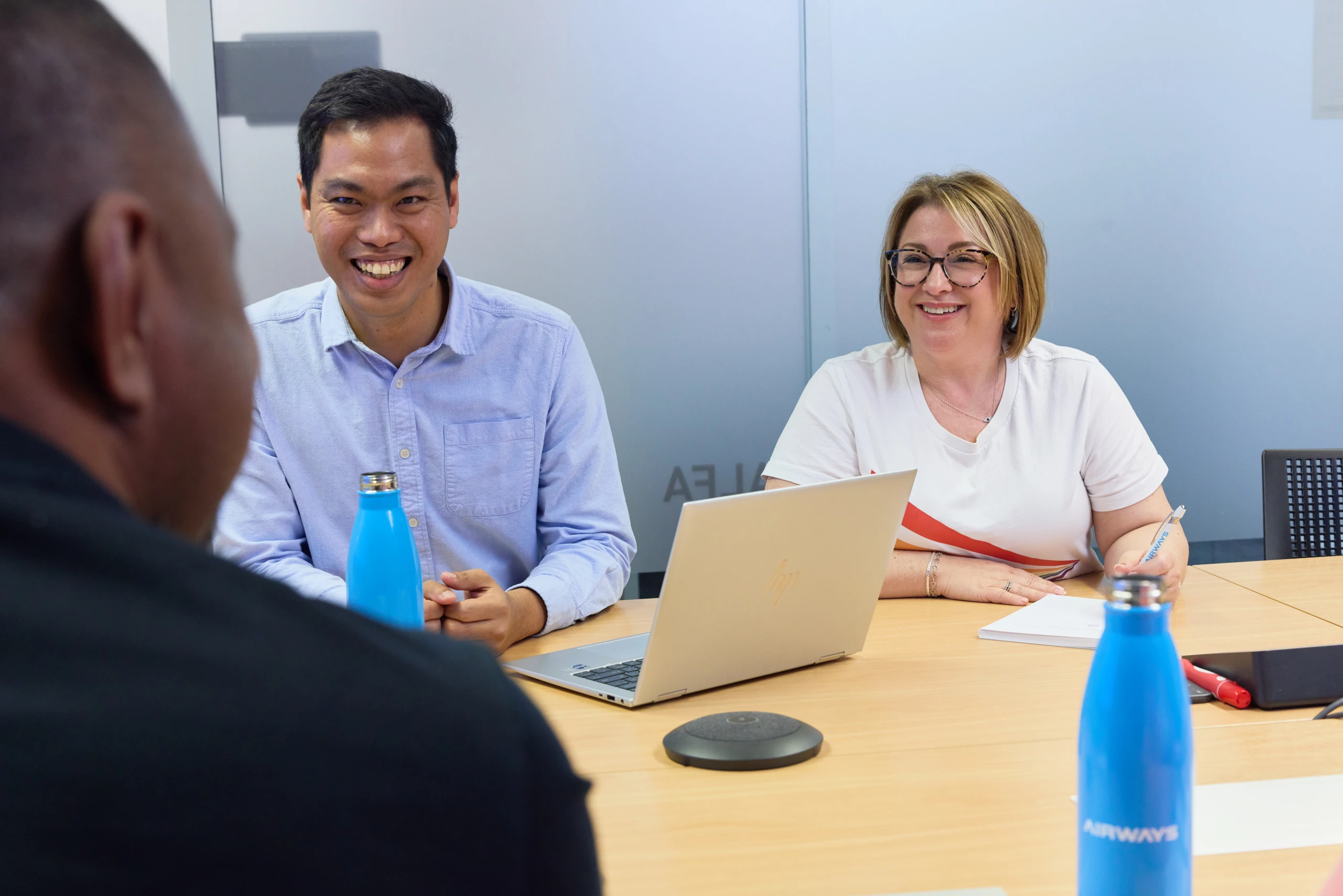
You will typically meet with a panel that may include managers, team leads, and members of Airways' People Team.
Smooth communication
Listen carefully to each question, take a moment to structure your thoughts, and provide clear, concise, and relevant responses.
Show enthusiasm and engagement
Beyond answering questions, showing genuine interest in the role and the work we do at Airways leaves a strong impression. Candidates who bring energy, curiosity, and a proactive mindset stand out in the interview process. Thoughtful questions, clear communication, and a strong understanding of the role all signal motivation and fit for the team.
Stay composed under pressure
If you’re asked a question you don’t immediately know the answer to, take a breath. It’s okay to pause and collect your thoughts rather than rushing into an unclear response. If needed, you can ask to return to a question later in the interview. This demonstrates self awareness and composure.
Ask questions
Remember, this is also your opportunity to assess whether the role and Airways are the right fit for you. Feel free to ask about career progression, team culture, or how we support professional growth.
Virtual interview success tips
Virtual interviews require the same level of professionalism as in person interviews, but they also come with unique challenges. To make the best impression, ensure your technology is set up and tested in advance. Check your camera, microphone, and internet connection to avoid last minute technical issues.

Choose a quiet, distraction free space with good lighting. Ideally, face a natural light source or use a well placed lamp so you are clearly visible. Your background should be tidy and neutral to keep the focus on you.

During the interview, stay engaged by sitting upright, making eye contact with the camera rather than the screen, and actively listening to the panel. Speak clearly and at a steady pace, allowing for any potential audio delays. If multiple interviewers are present, acknowledge each speaker and avoid interrupting. Keep notes nearby if helpful, but use them sparingly, as reading from a script can sound unnatural.

If you experience technical difficulties, stay calm and handle them professionally. If your audio or video cuts out, politely acknowledge the issue, attempt to reconnect, and if needed, follow up promptly with the interviewer to resume the conversation.

Just like an in person interview, dress professionally to put yourself in the right mindset and show that you take the opportunity seriously. A well prepared virtual setup allows you to focus on delivering confident, well structured answers without unnecessary distractions.

- Give me an example of when you had to act even though you didn’t feel fully confident yet.
- Describe a time you had to work closely with someone under pressure. What made the partnership effective?
- Describe a situation where you had to balance competing priorities. How did you decide what came first?
- Tell me about a moment you misunderstood someone. How did you resolve it?
Disclaimer: The questions listed are examples only and are provided to help you prepare for your interview. They illustrate the types of themes and competencies Airways may explore but may not necessarily be used on the day. Actual interview questions may differ in wording, structure, or focus based on the interview panel and operational requirements
Am I ready?
This self-assessment checklist is a simple way to reflect on your interview readiness. It helps you review key areas and identify where you may want to focus your preparation.